
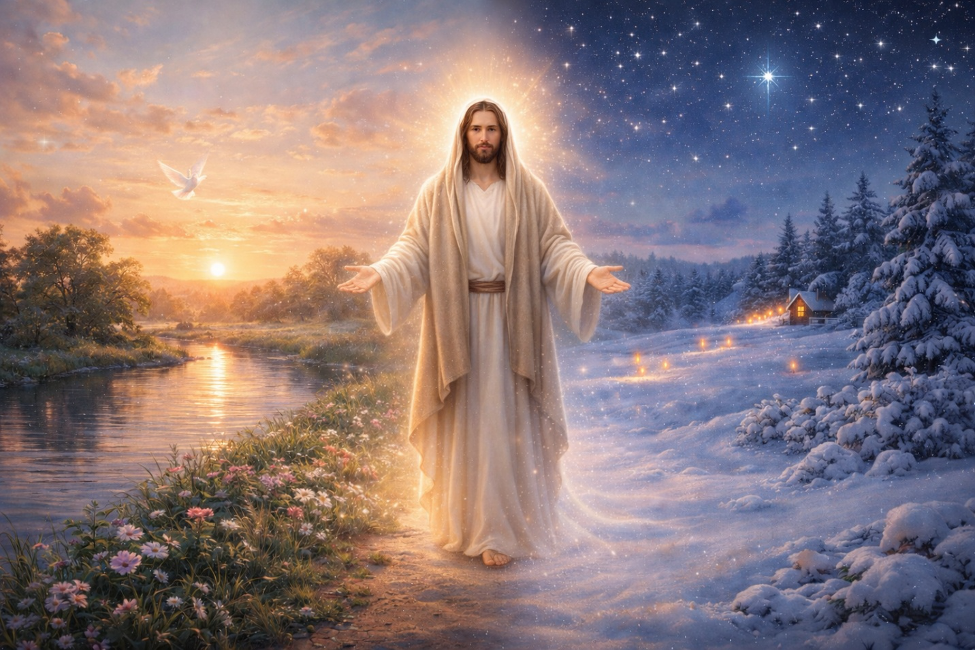
In the rich tapestry of human traditions, the way we mark the birth of Jesus has evolved over centuries. The Urantia Book gives us a starting point with its August 21st, 7-BC date, offering a glimpse into the historical and cosmic context of Jesus’ arrival on our world, Urantia.
From Summer to Winter: How December 25th Emerged
Historically, the choice of December 25th as the date to celebrate Jesus’ birth came about for several reasons. Early Christians did not initially fix a specific date for this celebration. Over time, as Christianity spread and encountered other cultural traditions, the Roman world already had midwinter festivals like Saturnalia and the celebration of Sol Invictus (the Unconquered Sun).
By choosing December 25th, early Christian leaders found a meaningful way to align the celebration of Jesus’ birth with the existing festival of light returning after the winter solstice. It became a symbolic gesture: just as the world grew brighter with the lengthening of days, so too did the spiritual light grow with the birth of Jesus.
A Deeper Celebration of Light
For readers of the Urantia Book, this shift from August to December doesn’t diminish the significance of the event; it enriches it. It shows how humanity has woven together different traditions to honor a central truth: that the birth of Jesus is a beacon of hope and love. The date itself became a universal symbol, allowing people from all walks of life to gather in the spirit of peace and goodwill.
Embracing the Universal Message
Ultimately, whether we celebrate in the warmth of summer or the chill of winter, the Urantia Book’s perspective encourages us to remember the heart of the celebration. It’s about the light of divine truth entering the world, and the timeless invitation to live with greater love, forgiveness, and unity. And in that sense, every day can be a celebration of that divine birth within our own hearts.
When we reflect on the birth of Jesus, the Urantia Book invites us to look beyond tradition and into meaning. According to its teachings, Jesus, known cosmically as Michael of Nebadon, was born on August 21, 7 BC, not in the depths of winter, but under the warmth of a Middle Eastern summer. This detail reminds us that the power of his birth lies not in a calendar date, but in the life and love that followed.
A Birth Remembered Before It Was Celebrated
For the first generations after Jesus’ life and death, there was no formal celebration of his birth at all. Early followers were far more focused on his teachings, his resurrection, and the transformation he inspired in human hearts. In fact, nearly three centuries passed after Jesus’ crucifixion before Christians began publicly celebrating his nativity.
During those early centuries, Christians were often a small, misunderstood, and at times persecuted community. Faith was lived quietly, courageously, and relationally—shared person to person rather than proclaimed by public festivals.
From Persecution to Permission
A major turning point came in the early fourth century, during the reign of Emperor Constantine. With the Edict of Milan in AD 313, Christianity was legalized within the Roman Empire. This shift did not instantly create a unified church, but it did allow Christian communities to gather openly, organize traditions, and establish shared celebrations.
It was during this period of growing political tolerance and cultural blending that December 25th emerged as the chosen date to honor Jesus’ birth. The date aligned with existing Roman festivals that celebrated light returning after the winter solstice. For early Christians, this symbolism resonated deeply: the light of divine love entering a darkened world.
December 25th as a Symbol of Shared Hope
From an Urantia perspective, the selection of December 25th was less about historical accuracy and more about spiritual meaning. It offered a universal moment—a pause in the year—when people could gather around ideals of peace, generosity, forgiveness, and goodwill.
And something remarkable still happens around this season.
Across cultures and belief systems, Christmas time often softens human hearts. Acts of charity increase. Families reconcile. Strangers show kindness. Even amid global tensions, the idea of peace on earth and goodwill toward all seems to bloom more visibly than at any other time of year.
A Gentle Acknowledgment of Human Growing Pains
Of course, the season is not without contradiction. History reminds us that even as Christmas speaks of peace, some have faced misunderstanding or hardship for following Jesus’ teachings. The Urantia Book helps us see these moments not as failures of faith, but as signs of a young world still learning how to live love consistently.
What matters most is not perfection, but progress.
Living Christmas Beyond the Date
Whether remembered in August or celebrated in December, the true meaning of Jesus’ birth is not confined to a single day. It lives on whenever we choose brotherly love over fear, understanding over judgment, and service over self-interest.
In that sense, Christmas is not merely an anniversary of a birth long ago.
It is a living invitation—renewed each year—to let divine love take flesh again, this time through us.