
A couple of weeks ago, I found myself at an all-day outdoor party. The sun was blazing, the conversations were lively, and I was in my element—talking with friends and sharing stories. Ironically, much of my chatter that day was about water and its importance. But here’s the catch: while I was talking about water, I wasn’t drinking nearly enough of it.
Hour after hour slipped by, and instead of sipping from a water bottle, I nibbled here and there, distracted by snacks and small talk. It wasn’t long before I felt that creeping wave of dizziness. My knees buckled, and I was on the ground before I knew what happened. I woke up to the disorienting sensation of someone doing chest compressions on me with all my friends standing around sending love, . A few minutes later the EMT’s arrived and since my blood pressure was about 90 / 60 they had no choice but to rush me to the hospital
Before taking off to the hospital I asked for my water bottle only to discover it was nearly full and I realized I hadn’t drank hardly any water that whole day. That moment was a wake-up call. It wasn’t just a reminder that water is essential; it was a dramatic demonstration of how easily we can underestimate hydration until our body forces the lesson on us.
The Hunger–Thirst Mix-Up
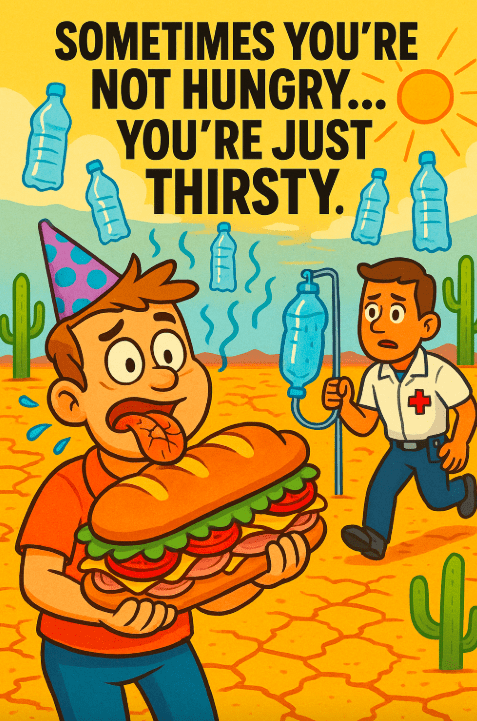
Here’s something many people don’t realize, often when we think we’re hungry, we’re just thirsty. The signals can feel remarkably similar. The body asks for hydration, but the mind interprets it as a craving for food. So, we grab a snack when what we really need is a drink of water.
The irony is that food, especially salty or processed food, can actually dehydrate us further. Digestion requires water. The moment food enters your stomach, your body rushes blood and fluids to the gut to get the digestive process started. That means water you already have in circulation gets pulled away from cells and tissues to help break down that meal. The result? You feel even drier, and the cycle continues.
This is why staying hydrated isn’t just about quenching thirst—it’s also about preventing unnecessary hunger pangs and keeping digestion from draining your reserves.
Practical Hydration Tips
So, what can you do to avoid learning the hard way, like I did? Here are a few simple strategies that can make a big difference:
- Drink Before You Eat
The next time you feel hungry, try drinking a glass of water first. If the “hunger” fades within fifteen minutes, it was thirst disguised as appetite. - Flavor Your Water
If plain water feels boring, jazz it up. A few drops of peppermint or mint, a squeeze of lemon, or even a splash of apple juice can make it much more appealing without turning it into a sugary drink. - Set Reminders
Most of us don’t drink water because we forget, not because we don’t want to. Set a phone reminder or keep a bottle nearby. If you see it, you’re more likely to sip it. - Eat Hydrating Foods
Cucumbers, oranges, watermelon, celery—these foods are full of water and minerals that support hydration naturally. - Know the Signs
A dry mouth, fatigue, dizziness, or headaches are often early red flags. Don’t wait for extreme thirst—by then, you’re already dehydrated.
A Simple but Life-Saving Habit
That day at the party taught me more than any article or lecture ever could: hydration is not optional. It’s the foundation for energy, clarity, and even safety. The truth is, a little attention to water intake can prevent a cascade of problems—from unnecessary overeating to dangerous drops in blood pressure.
So, stay safe, stay hydrated, and remember: sometimes when your stomach growls, it’s not food you need—it’s water. Try a glass of it before reaching for that snack. Your body will thank you, and you’ll avoid learning the lesson the hard way, as I did.